Curiosity is the heartbeat of childhood. Kids love asking questions, chasing clues, and uncovering hidden treasures. That’s why scavenger hunts have stood the test of time — they combine problem-solving, movement, and imagination in one playful package. Unlike many structured games, scavenger hunts give children freedom: they decide where to look, how to interpret clues, and which strategy works best.
What makes scavenger hunts magical is their adaptability. They can be tailored to fit any age group, any location, and any theme. Rainy afternoon? Create an indoor hunt with household objects. Sunny Saturday? Transform your backyard into a treasure island. Classroom activity? Use scavenger hunts to reinforce lessons in science, reading, or history.
In this guide, we’ll explore 15 unique scavenger hunt ideas — some designed for cozy indoor play, others perfect for outdoor adventures. Each one offers not just entertainment, but opportunities for learning, teamwork, and creativity. Ready? Let’s start the hunt!
Indoor Scavenger Hunts
1. Color Quest Hunt
Give children a list of colors instead of objects. Their task is to find one item in the house that matches each color. For younger kids, this builds recognition skills. For older ones, challenge them to find unusual shades like “turquoise” or “maroon.”
This hunt encourages kids to look at their environment more closely, noticing details they might normally overlook. It works brilliantly for rainy afternoons and requires no special preparation.
Pro Tip: Turn it into a photo hunt by letting kids snap pictures of their finds instead of carrying items.
Cleanup Rating: Very low — objects return to their spots easily.
2. Alphabet Explorer Hunt
Write down the letters A through Z, and kids must find items around the house that begin with each letter. For younger players, keep it simple with everyday objects. For older ones, add a timer for extra excitement.
This scavenger hunt doubles as a literacy exercise, reinforcing phonics and vocabulary in a playful way. Teachers especially love this activity for classroom energizers.
Pro Tip: Offer bonus points for unusual finds (like “xylophone” for X).
Cleanup Rating: Medium — kids may drag out lots of items at once.
3. Riddle Room Hunt
Instead of listing items, give kids riddles or clues that describe objects. Example: “I’m cold inside but warm outside when I work. Who am I?” (the fridge).
This sparks critical thinking and problem-solving skills. Children beam with pride when they solve a tricky clue. Plus, riddles make even ordinary household items feel magical.
Pro Tip: For siblings of different ages, mix easy and harder riddles so everyone can contribute.
Cleanup Rating: Low.
4. Shape Sleuth Hunt
Hand kids a list of shapes — circle, square, triangle — and ask them to find items around the home that match. A clock for a circle, a window for a square, a pizza slice for a triangle.
This turns geometry into a playful challenge. It’s perfect for early learners who are still mastering shapes but can be scaled up with 3D forms like “cylinder” or “sphere” for older kids.
Pro Tip: Create a checklist so kids can tick off shapes as they go.
Cleanup Rating: Very low.
5. Mystery Bag Hunt
Hide several objects in opaque bags. Kids must feel the items without looking, then race to find their “match” somewhere in the house.
This sensory-based scavenger hunt sharpens touch perception and memory. Children love the thrill of discovery when they confirm their guess.
Pro Tip: Use safe, everyday items like spoons, toy cars, or socks.
Cleanup Rating: Medium — bags need resetting between rounds.
Outdoor Scavenger Hunts
6. Nature Treasure Hunt
Give kids a list of natural items to find: a smooth stone, a yellow flower, a feather, a pinecone. Encourage them to observe textures, colors, and smells as they collect.
This hunt connects children to the outdoors and helps them appreciate the diversity around them. It works well in parks, gardens, or backyards.
Pro Tip: Include a “sketch this” option where kids draw something instead of picking it up, teaching respect for nature.
Cleanup Rating: Low — encourage leaving items where found.
7. Animal Track Hunt
In outdoor areas, kids search for signs of animal life — paw prints, bird feathers, or nests. If no tracks are visible, use printed cards of animal tracks and hide them along a trail.
This hunt introduces children to the idea of ecosystems and wildlife awareness. It’s both playful and educational.
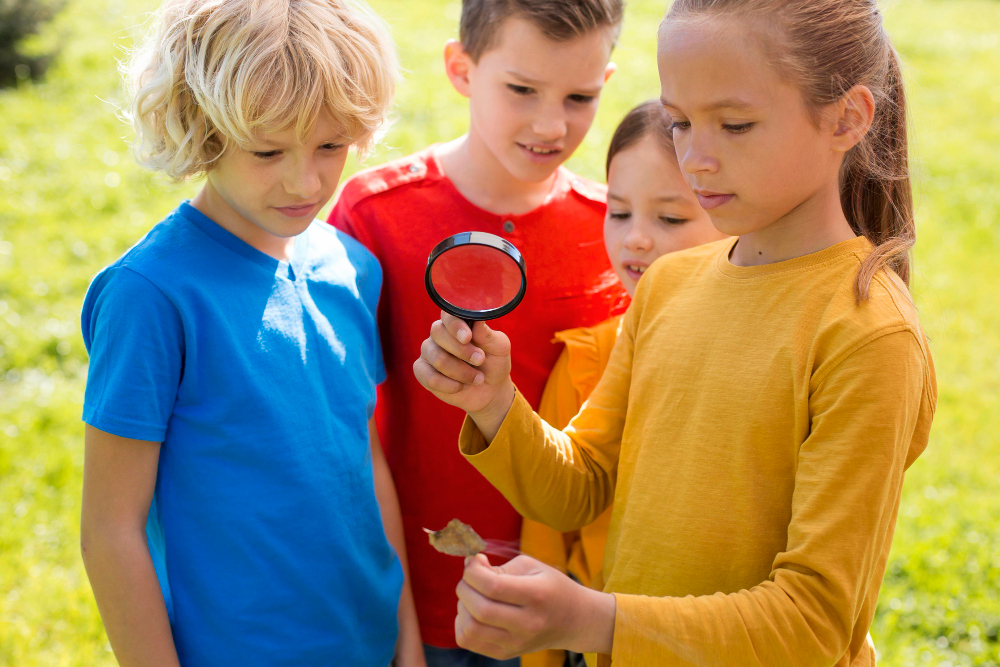
Pro Tip: Provide magnifying glasses for extra detective fun.
Cleanup Rating: Very low.
8. Neighborhood Landmark Hunt
Create a list of local landmarks: the mailbox with a red flag, a house with a blue door, a tall tree at the corner. Kids must spot each item as they walk through the neighborhood.
This encourages observation skills while promoting outdoor exercise. It’s also a great way to connect kids with their community.
Pro Tip: For safety, pair children with adults during neighborhood walks.
Cleanup Rating: None.
9. Seasonal Scavenger Hunt
Customize the hunt to the season. In fall, kids search for orange leaves, acorns, or scarecrow decorations. In spring, look for blossoms, butterflies, or rain puddles.
Seasonal hunts build awareness of how the world changes over time. They also tie into holidays, making them extra festive.
Pro Tip: Provide clipboards and pencils for kids to check items off as they explore.
Cleanup Rating: Low.
10. Sports Gear Hunt
Hide balls, bats, or cones around the yard. Kids must find them and bring them back to the “team base.”
This combines scavenger hunting with physical activity. Children end up running, throwing, and sometimes inventing games with the gear they uncover.
Pro Tip: Turn it into a relay race for added excitement.
Cleanup Rating: Medium — equipment needs organizing afterward.
Combo (Indoor + Outdoor) Hunts
11. Glow-in-the-Dark Hunt
Hide glow sticks or LED trinkets indoors with the lights off, or outdoors after sunset. Kids must find glowing treasures guided by faint hints or riddles.
The glow creates a magical, almost spooky vibe that works beautifully for slumber parties or summer nights.
Pro Tip: Hide objects in unexpected places — like inside shoes or tree branches.
Cleanup Rating: Medium — make sure all glow sticks are collected.
12. Puzzle Piece Hunt
Hide pieces of a puzzle around the house or yard. Kids must find them all, then work together to complete the puzzle.
This encourages teamwork and patience, blending physical searching with problem-solving.
Pro Tip: Choose puzzles with large pieces for younger kids and more complex ones for older groups.
Cleanup Rating: Medium-high — missing pieces can stall the fun.
13. Storybook Character Hunt
Print or draw characters from a favorite storybook. Hide them around the play area. Kids must find all the characters and arrange them in story order.
This scavenger hunt sparks imagination while reinforcing literacy. It’s especially magical when themed to beloved tales like The Very Hungry Caterpillar or Where the Wild Things Are.
Pro Tip: Add props (like paper crowns or magic wands) to enhance the storytelling.
Cleanup Rating: Low.
14. Clue-to-Clue Treasure Hunt
Instead of lists, give kids sequential clues. Example: “Look under the place where shoes sleep.” (shoe rack). Each clue leads to another until the final “treasure” is found.
This hunt builds suspense and critical thinking. It’s perfect for birthdays, where the treasure can be a small gift or treat.
Pro Tip: Adjust clue difficulty based on age group.
Cleanup Rating: Medium — requires setup time.
15. Friendship Photo Hunt
Give kids a checklist of fun photo prompts: “take a selfie with a friend making a silly face,” “snap a picture of the tallest tree,” “pose like a superhero.”
This turns scavenger hunts into memory-making experiences. Older kids especially enjoy the creativity of capturing moments.
Pro Tip: Create a digital slideshow afterward for everyone to enjoy.
Cleanup Rating: None.

Want even more adventurous twists? Explore our full guide on Creative Scavenger Hunt Ideas — packed with clever themes and unique challenges kids will absolutely love.
FAQs About Scavenger Hunts
Q1: How do scavenger hunts benefit kids?
Scavenger hunts aren’t just fun; they nurture problem-solving, observation, and teamwork skills. They promote physical activity and spark imagination, whether children are decoding clues or inventing creative strategies. Plus, scavenger hunts adapt easily — they can reinforce school lessons, celebrate seasons, or simply burn off energy indoors.
Q2: What age groups can enjoy scavenger hunts?
With the right adjustments, scavenger hunts suit nearly every age. Toddlers can do simple color or shape hunts, while teens enjoy more complex clue-based adventures. The key is scaling the challenge: keep it visual and straightforward for little ones, and add riddles, puzzles, or themes for older kids.
Q3: How do I keep scavenger hunts safe?
Safety depends on location. Indoors, avoid fragile items and keep cluttered areas off-limits. Outdoors, set clear boundaries, pair younger kids with adults, and ensure children know not to approach strangers’ property. A pre-game “safety briefing” helps everyone play with peace of mind.
Conclusion: Adventures Await Everywhere
Scavenger hunts remind us that the world is full of treasures — if only we look closely enough. For kids, these games are more than playful distractions; they’re opportunities to explore, imagine, and connect.
Whether indoors on a rainy day, outdoors in the sunshine, or a mix of both, these 15 scavenger hunts for curious kids spark joy while fostering skills that last a lifetime. The best part? You don’t need fancy supplies. Just a little creativity, some curious explorers, and a spirit of adventure.
So next time your kids are restless, don’t just hand them a toy — hand them a clue. The hunt begins now.