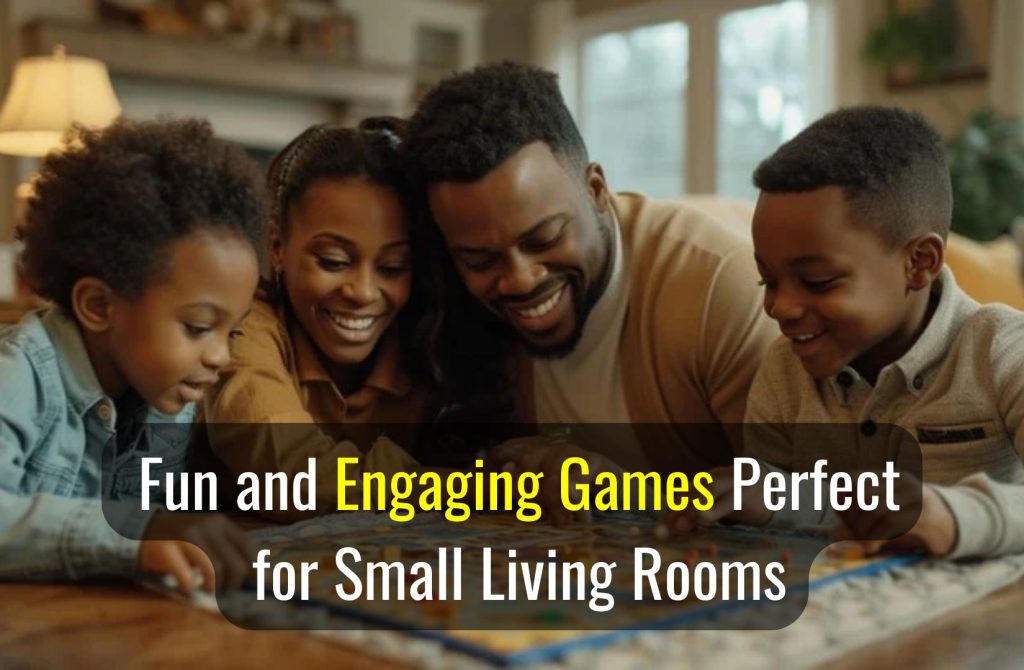

Living rooms are often the heart of the home — the place where families gather, friends drop by, and cozy evenings unfold. But what if your living room is small? Can you still host games that keep everyone entertained? Absolutely. In fact, limited space can make games even more creative, cozy, and fun.
The secret to small-living-room games is designing activities that use imagination, quick movement, or minimal props rather than sprawling space. You don’t need a mansion to laugh, bond, and compete. With the right games, even a small sofa-centered room becomes a playground of connection.
Here are 19 fun and engaging games designed specifically for small living rooms. Each one brings energy and laughter without overwhelming your space.
Why Play Indoor Games in Small Living Rooms?
Small living rooms often get overlooked as play spaces, but they can actually become the heart of family fun. With the right activities, limited space encourages creativity, closeness, and laughter. Indoor games designed for compact areas keep kids active, reduce screen time, and help families bond without needing a large home or backyard. They also work perfectly for rainy days, family nights, or apartment living where space is precious. By choosing smart, space-friendly activities, you turn your living room into a cozy playground where fun and connection thrive.
1. Cushion Shuffle
How It Works: Lay sofa cushions or pillows on the floor. Players hop from one cushion to another without touching the ground.
Why It Works: Living rooms naturally have pillows and cushions, so it’s a low-prep game. It’s also perfect for kids who love “floor is lava” style challenges.
Pro Tips:
-
Make it harder by spacing cushions further apart.
-
For adults, turn it into a balance challenge: who can stay on a cushion the longest?
Difficulty: Easy | Cleanup: Quick reset.
2. Hand-Clap Rhyme Battles
How It Works: Two players face each other, clap hands in rhythm, and create rhymes on the spot.
Why It Works: Needs no space, just imagination and timing. The sillier the rhyme, the funnier the round.
Pro Tips:
-
Use themes: food, animals, school life.
-
Record rounds to replay the laughter later.
Difficulty: Easy | Cleanup: None.
3. Sock Slide Curling
How It Works: Players slide balled-up socks across the floor, aiming for a target zone marked with tape.
Why It Works in Small Living Rooms: You don’t need wide lanes — even a tiny patch of smooth floor works.
Variations:
-
Play in teams and assign point values.
-
Add obstacles like cushions to bounce socks off.
Difficulty: Moderate | Cleanup: Collect socks.
4. Living Room Limbo
How It Works: Hold a broomstick or string and lower it round by round. Players lean back and try to pass under without touching.
Why It Works: Compact, funny, and adaptable for all ages.
Safety Note: Clear coffee tables or fragile items first.
Difficulty: Moderate | Cleanup: None.
5. Emoji Charades
How It Works: Instead of acting out movies, players act out emojis — laughing face, dancing girl, pizza slice. Others guess.
Why It Works: Relatable for kids and teens who love texting.
Pro Tips:
-
Print emoji cards if you want a visual aid.
-
Let kids invent their own emoji gestures.
Difficulty: Easy | Cleanup: None.
6. Remote Control Races
How It Works: Players use toy cars or small items tied to strings, racing them across the rug or floor.
Why It Works in Small Spaces: The “track” is small, making it more exciting.
Variations:
-
Add turns by using furniture legs as checkpoints.
-
Use paper boats or folded airplanes instead of cars.
Difficulty: Easy | Cleanup: Minimal.

7. Mirror Freeze
How It Works: One player is the leader, making silly moves. Everyone else mirrors them, but when the leader freezes, others must freeze too.
Why It Works: Combines humor with focus. Works well even in tight seating arrangements.
Difficulty: Easy | Cleanup: None.
8. The Whispered Word
How It Works: One player mouths a word silently while others guess.
Why It Works: Quiet, compact, and hilarious when guesses are wildly off.
Pro Tips:
-
Use categories like “animals” or “snacks.”
-
Kids love swapping roles as word-choosers.
Difficulty: Easy | Cleanup: None.
9. Blanket Tunnel Crawl
How It Works: Drape blankets over chairs or sofas to create a tunnel. Kids crawl through in under a minute.
Why It Works: Small rooms make tunnels feel extra cozy.
Variations: Add a treasure at the end of the tunnel for kids to retrieve.
Difficulty: Easy | Cleanup: Fold blankets afterward.
10. Popcorn Toss
How It Works: One player holds a bowl while the other tosses popcorn kernels into it from a short distance.
Why It Works: Requires little space, and snacks double as supplies.
Pro Tips:
-
Use marshmallows for younger kids.
-
Keep a vacuum handy for cleanup.
Difficulty: Easy | Cleanup: Quick.
11. Card Tower Challenge
How It Works: Players build the tallest card tower in one minute.
Why It Works: Needs nothing but a deck of cards and a steady hand.
Pro Tips:
-
For extra fun, dim the lights and use a flashlight “spotlight.”
-
Run elimination rounds for large groups.
Difficulty: Moderate | Cleanup: Cards stacked back.
12. The Giggle Game
How It Works: One person tries to make the others laugh while everyone else must keep a straight face.
Why It Works: Perfect for tight quarters — the challenge happens face-to-face.
Pro Tips:
-
No touching allowed — only faces, sounds, or jokes.
-
Kids usually collapse into giggles within seconds.
Difficulty: Easy | Cleanup: None.
13. Sticky Note Sprint
How It Works: Players race to cover themselves in as many sticky notes as possible in one minute.
Why It Works in Living Rooms: Compact, silly, and requires no movement across large areas.
Pro Tips:
-
Assign themes like “decorate yourself as a monster.”
-
Snap photos of the final results.
Difficulty: Easy | Cleanup: Collect sticky notes.
14. Pillowcase Shuffle
How It Works: Players sit on pillowcases and shuffle across the floor using only their arms.
Why It Works: Safe, fun, and uses apartment-friendly movement.
Safety Note: Works best on carpeted floors to prevent slipping.
Difficulty: Moderate | Cleanup: None.
15. Story Relay
How It Works: One person starts a story with one sentence. Each person adds a sentence until the story becomes absurdly funny.
Why It Works: No movement, just imagination. Perfect for small group storytelling.
Pro Tips:
-
Record the story and read it aloud after.
-
For older kids, make it “spooky story night.”
Difficulty: Easy | Cleanup: None.
16. Hallway Bowling (Mini Version)
How It Works: Set up empty water bottles in the hallway and roll a soft ball to knock them down.
Why It Works: Uses long, narrow apartment hallways effectively.
Pro Tips:
-
For toddlers, roll balloons instead of balls.
-
Create score sheets for a “league.”
Difficulty: Easy | Cleanup: Reset pins.
17. Human Pretzel
How It Works: Two or more players stand close together, intertwine arms, and try to untangle without letting go.
Why It Works: It’s compact and hilarious in small rooms.
Pro Tips:
-
Works best with family groups.
-
Keep rounds short to prevent frustration.
Difficulty: Moderate | Cleanup: None.

18. The Paper Straw Relay
How It Works: Players use straws to pick up small objects (cotton balls, cereal) and transfer them to a bowl.
Why It Works in Living Rooms: Requires only a table or small coffee table.
Pro Tips:
-
For kids, use colorful candy pieces.
-
Make it cooperative: everyone contributes to filling the same bowl.
Difficulty: Moderate | Cleanup: Collect items.
19. The Living Room Talent Show
How It Works: Each person gets one minute to perform a “talent” — from silly dances to jokes or tricks.
Why It Works: Living rooms become instant stages, even if they’re small.
Pro Tips:
-
Encourage creativity, not perfection.
-
Use a phone to record and replay.
Difficulty: Easy | Cleanup: None.
Want even more cozy fun? Explore our list of 18 fun indoor games perfect for small apartments and discover creative ways to turn tight spaces into laughter-filled play zones.
FAQs About Small Living Room Games
Q1: How do I keep games safe in small living rooms?
Choose low-impact activities. Avoid running or jumping that could bump into furniture. Always clear fragile items off tables before starting.
Q2: Can these games work for both kids and adults?
Yes! Games like Story Relay, Giggle Game, and Card Towers are universal. Adjust difficulty levels for age groups — kids love silliness, while adults enjoy competitive twists.
Q3: What supplies do I need?
Most games use household items — pillows, socks, sticky notes, cards, or popcorn. Keep a small box of game supplies handy so you can set up instantly.
Q4: How long should living room games last?
5–15 minutes per game is ideal. For game nights, pick 4–5 activities to keep energy balanced between silly, quiet, and active.
Q5: Can these games work for small gatherings?
Absolutely. Many games are designed for 2–4 players, making them perfect for roommates, couples, or families in small homes.
Final Thoughts
Small living rooms may limit space, but they don’t limit fun. With a little creativity, you can transform even the coziest space into a playground of laughter and connection. These 19 engaging games prove that family bonding, group fun, and creativity don’t require a big room — just imagination.
So the next time you’re craving fun, grab a deck of cards, a pile of socks, or a few sticky notes. Your small living room might just become the stage for your family’s best memories yet.